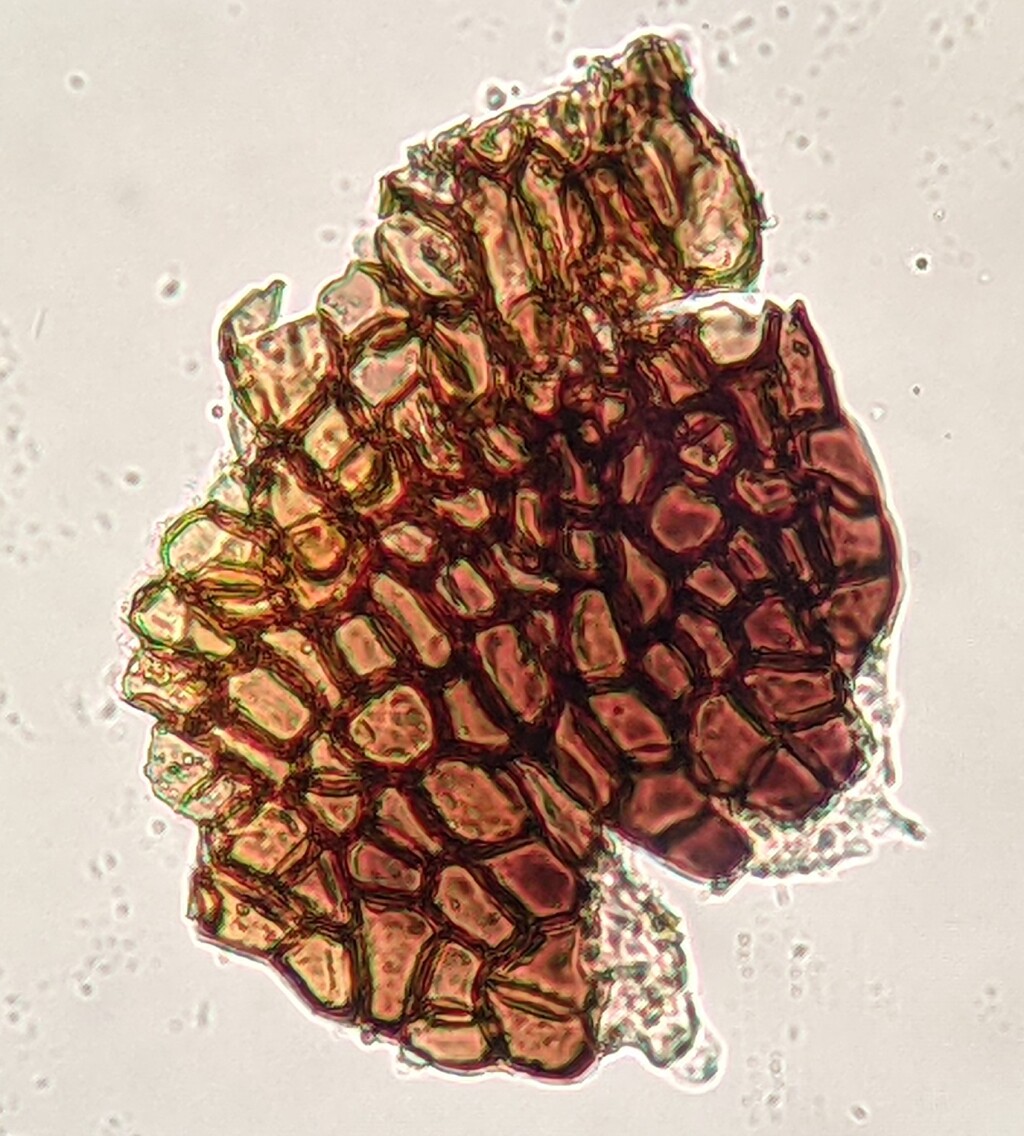
Mats composed of black, rigid, interwoven stems, with leaves mostly perceptible only barely and near the growing apex. Leaves bifid, 160–250 μm long, 150–250 μm wide; lobes 1/4–1/2 leaf length, 5–12 cells wide at base. Leaf cells polygonal, quadrate and rectangular, varying sizes adjacent to each other, 10–28 μm long, 8–20 μm wide. Underleaves reduced to a single cell bearing a slime papilla or near gynoecium comprised of up to 4–5 cells. Bracts similar to vegetative leaves; bracteole present, ovate, unlobed, connate with both bracts.
MuM, VAlp. On rock beside and in streams and bogs in the alpine zone of the Victorian Alps. Also, New South Wales, Tasmania and New Zealand.
At first impression, this species is not obviously recognisable as a liverwort because of the lack of obvious leaves and black wiry stems. However, once its identity is known these features in combination with its aquatic habitat make it a very distinctive species that is easily recognised.