
Cotula alpina
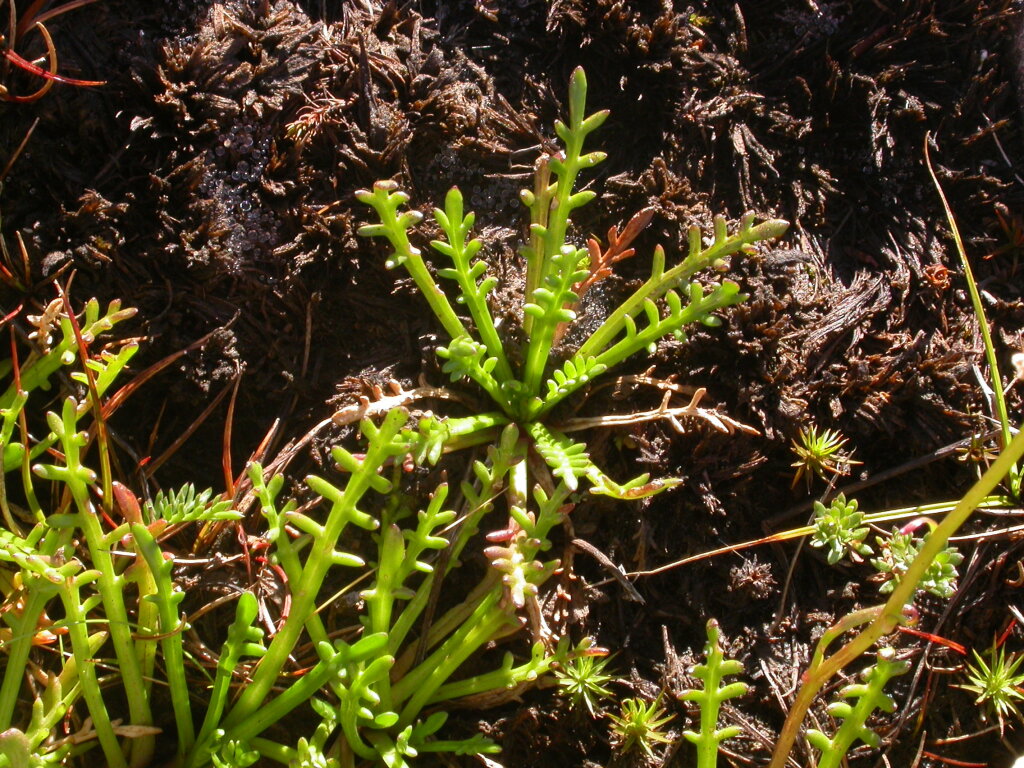
(Hook.f.) Hook.f. Alpine CotulaStoloniferous, rosetted, glabrous perennial. Leaves oblong in outline, mostly 2–4 cm long, 4–8 mm wide, 1-pinnatifid, stem-clasping at base, glandular, petiolate; pinnae lanceolate to ovate, acute, mucronate, sometimes irregularly toothed. Capitula 3–7 mm diam., terminal; peduncles shorter than leaves at anthesis (but to 5 cm in fruit), stout, hollow; involucral bracts many, oblong, 2–3 mm long, margins purplish. Female florets 3- or 4-seriate, corolla absent; inner florets usually functionally male, corolla c. 1 mm long, glandular. Cypselas more or less obovate, 1.5–2 mm long, compressed, glandular and sometimes ciliate distally, margins thickened and wing-like. Flowers summer.
EGU, HSF, HNF, MonT, HFE, VAlp. Also NSW, ACT, Tas. Scattered in alpine and sub-alpine areas of the Eastern Highlands, usually in moist herbfield, often near the margins of Sphagnum mossbeds.
There is strong evidence to support the placement of this species in Leptinella rather than Cotula. However, there may also be an argument to recircumscribe Cotula to include both Leptinella and Soliva – making the reclassification of C. alpina unnecessary. See Schmidt-Lebuhn & Grealy (2024).
Jeanes, J.A. (1999). Asteraceae. In: Walsh, N.G.; Entwisle, T.J., Flora of Victoria Vol. 4, Cornaceae to Asteraceae, pp. 652–666. Inkata Press, Melbourne.
 Spinning